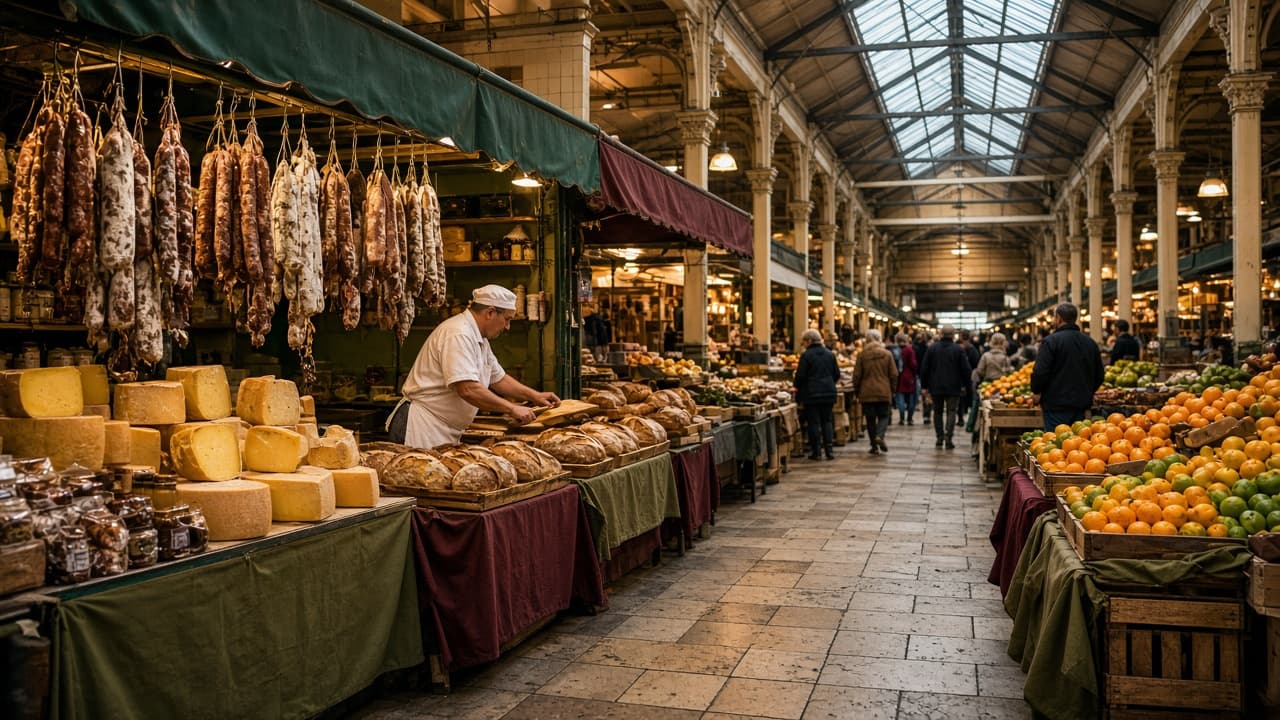
Why a produce hall is a better classroom than a souvenir strip
A souvenir strip sells the idea of a city. A produce hall sells the groceries the city actually cooks. That is why Adelaide starts at Central Market, why Melbourne still argues about Queen Victoria Market, and why Hobart orients on Salamanca. Sydney has fish and suburban halls that teach more than a harbour kiosk.
A guided market tour buys introductions — a cheesemonger who will cut the piece you would have been too polite to ask for, a baker who will explain the grain, a route that does not loop the same jam stall. A DIY morning buys agency. Both are legitimate. The how to choose page is the longer argument.
Read the seasonal produce article after your first hall visit. Operators who work with markets rewrite menus when the stone fruit stops. Visitors who ignore seasons wonder why the peaches are sulking in July.
How to read a hall without buying a suitcase of relish
Walk the perimeter once before you spend. Taste small. Buy the thing that will not travel last. Ask where the stallholder would eat lunch. That last question is worth more than a map. The market mornings article is the field guide version of this paragraph.
Night markets — river stalls in Brisbane, various city night yards — are a different product: noise, smoke, a graze. They teach appetite more than season. Do not confuse them with a morning hall if you came for citrus literacy.
Photography is fine until it is a job that blocks a local doing the weekly shop. Be a guest in a working room. That is the whole ethic.
When a market tour is the wrong tool
It is the wrong tool on a closed trading day. It is the wrong tool if your group wants a seated degustation — take chef-guided. It is the wrong tool if you came for vines — take a winery tour after the hall, not instead of lunch.
It is an excellent tool for families who need movement and snacks, and for solo travellers who want a city’s pantry without a dinner reservation. Ask about bags, breaks and whether the tour includes a sit-down coffee. Standing for three hours with a cauliflower is a personality test.
Compare halls across cities only after you admit they have different calendars and different relationships to a wine region. Adelaide’s hall is a foyer. Melbourne’s is a civic argument. Hobart’s Saturday is a ritual. Sydney’s fish story is a morning sport.
A market morning that still leaves room for dinner
Two hours, one coffee, one bag, one neighbourhood dinner you now know how to choose. That is a food day. Adding a walking tour the same morning is how people get full before the good stop.
Wet weather turns halls into the best room in the city. Heat turns them into a reason to start at opening. Neither needs a ranking.
Bring a tote you can actually carry on a tram or a ferry. The people who buy a crate of citrus without a plan are the people who abandon fruit at the hotel. Buy for tonight’s dinner and tomorrow’s breakfast. Leave the festival haul for residents. That discipline is how a visitor stays welcome in a working hall.
A hall is a civic room, not a set
Residents are doing the weekly shop while you are doing an education. Give them the counter. Do not block a scale for a photograph. If a tour treats the hall as a set, you will feel it in the way stallholders shorten their sentences. The market mornings essay is blunt about this because the alternative is a hall that starts hiding from visitors.
When you leave, you should have a dinner plan and a lighter tote than your ambition. If you have a crate and no dinner plan, the hall taught you less than the souvenir strip would have. That is the literacy test, and it is why this page exists beside the city guides rather than instead of them.