Guide
Melbourne food tours: laneways, markets and neighbourhoods
How to choose a food tour in Melbourne: the CBD laneways, Queen Victoria Market and the other produce halls, the multicultural neighbourhoods worth a guided walk, day trips to the Yarra Valley and Dandenongs, and how to plan around the weather.
Published
Melbourne is one of the best cities in Australia for a food tour because its food culture is concentrated in walkable places: the laneways and arcades of the CBD, large produce markets, and inner suburbs shaped by generations of migration. For a first visit, a CBD laneway walk or a Queen Victoria Market tour is the easiest starting point. For a second visit, choose a neighbourhood tour or a day trip to the Yarra Valley.
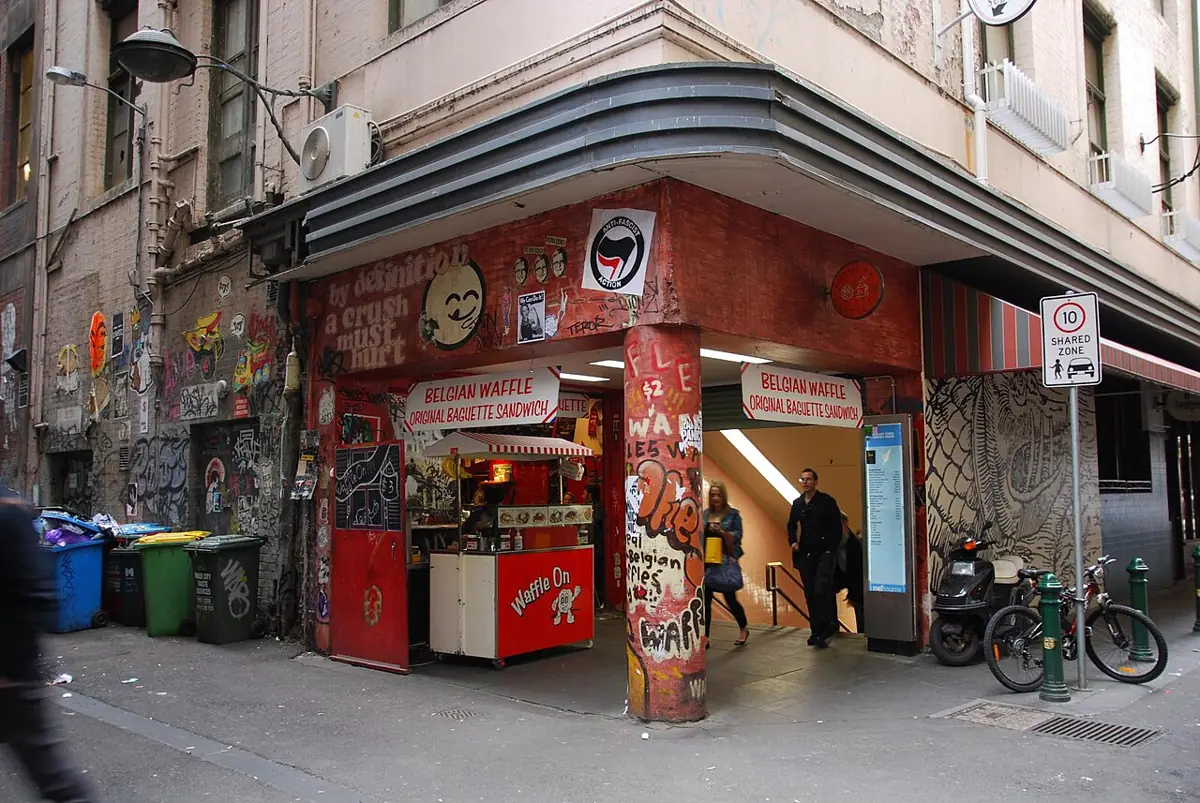
Photo: Degraves Street exit.jpg by Alpha, CC BY-SA 2.0, via Wikimedia Commons.

This guide explains each option, who it suits and how to plan it. It sits within our food tours planning guide, and the city overview lives on our Melbourne page. We do not sell tours or publish prices; always confirm details with the operator.
Why Melbourne suits a food tour
Three things make Melbourne particularly good for guided food walks.
- Density. The CBD grid, with its laneways and arcades, packs many cafés, bakeries and small bars into a short walk.
- Markets. Several large, long-established produce markets still trade, so a guide can introduce you to traders who have been there for years.
- Migration history. Waves of migration have shaped whole streets and suburbs. A good guide explains how those communities built the city's food culture.
Melbourne's café and coffee culture is also part of most tours, whether as a stop or as the story behind a laneway.
CBD laneway and arcade tours
Laneway tours are the classic first-timer option. They usually start near Flinders Street or the city's central arcades and wind through laneways such as Degraves Street and Centre Place, with stops at cafés, dumpling houses, patisseries and small bars.
Who it suits: first-time visitors, people short on time, and anyone who wants to get their bearings.
What to look for: a route that goes beyond the most photographed lanes, a guide who explains the history of the arcades, and stops that serve something genuinely local rather than generic snacks. Our walking food tours page has a general checklist.
Queen Victoria Market and the produce halls
Queen Victoria Market on the northern edge of the CBD is Melbourne's best-known market, with meat and fish halls, a deli hall, fruit and vegetable sheds and general merchandise. Market tours typically take you through the halls with tastings from traders and an explanation of what is in season.
Melbourne has other well-known markets, including South Melbourne Market and Prahran Market, and some tours focus on these instead.
Planning notes:
- Markets trade on set days, not every day, and hours change on public holidays. Check the official market website first.
- Morning tours see the market at its busiest and freshest.
- Queen Victoria Market runs seasonal night markets, which are a different, more festival-style experience.
For tips on what to look for at any produce hall, read our article on reading a produce hall and our market tours page.
Neighbourhood tours
Once you have seen the CBD, a neighbourhood tour is where Melbourne really opens up. Popular areas include:
| Area | Known for | Who it suits |
|---|---|---|
| Carlton (Lygon Street) | Italian cafés, delis and pasticcerie | Coffee and Italian food lovers; see Italian tables in Australian cities |
| Richmond (Victoria Street) | Vietnamese restaurants and grocers | Fans of pho, banh mi and Southeast Asian produce |
| Footscray | Vietnamese, African and other communities; a busy market | Adventurous eaters |
| Brunswick (Sydney Road) | Middle Eastern, Lebanese and Turkish bakeries and grocers | Bread, pastry and spice lovers |
| Chinatown (Little Bourke Street) | Dumplings, noodle houses and regional Chinese cooking | Anyone, at any time of day |
| Fitzroy and Collingwood | Cafés, bakeries, wine bars | Modern Melbourne dining |
Neighbourhood tours often run with smaller groups and a guide from or closely connected to the community. Ask the operator how the stops are chosen and whether the venues are locally owned.
Day trips: Yarra Valley and the Dandenong Ranges
Melbourne is close to two of Victoria's best food regions.
- The Yarra Valley is known for cool-climate wine, especially chardonnay, pinot noir and sparkling wine, alongside cheese, chocolate and farm-gate produce. Many tours combine cellar doors with lunch. See our Yarra Valley page and winery tour day planning guide.
- The Dandenong Ranges offer forest villages, tearooms, bakeries and berry farms, with a very different, cooler feel. Our article on a Dandenong Ranges food day and the Dandenongs page explain how to plan it.
Further afield, the Mornington Peninsula, Daylesford, Ballarat and Bendigo all have food and wine experiences and can be combined with a longer Victorian trip.
When to go and how to dress
Food tours run in Melbourne all year. A few points help:
- Spring and autumn are the most comfortable for walking.
- Summer can be hot; morning or evening tours are more pleasant.
- Winter is cold and often wet, but laneway cafés and indoor markets come into their own.
- Melbourne is known for changeable weather. Wear comfortable shoes and bring layers and a light rain jacket whatever the forecast.
Weekends and school holidays book out first. For a specific date, book early.
How to compare Melbourne food tours
When you compare operators, look past the headline and check:
- Group size and whether the guide can realistically talk to everyone.
- The number of stops and what is served at each one.
- Inclusions, such as drinks, a sit-down meal or transport.
- Dietary handling. See our dietary requirements guide.
- Duration, distance walked and accessibility.
- Cancellation and weather policies.
We never publish operator prices because they change, but comparing these points tells you what the price actually buys. Our what to expect on a food tour guide explains the day itself.
A simple Melbourne food itinerary
If you have two days and want to combine guided and self-guided eating, this structure works well:
- Day 1 morning: a guided Queen Victoria Market tour (on a trading day).
- Day 1 afternoon: self-guided coffee and pastries through the CBD arcades.
- Day 1 evening: a guided laneway or Chinatown tour, or dinner in Carlton.
- Day 2: a Yarra Valley food and wine day with transport, or a Dandenongs day if you prefer forest villages and tearooms.
When to get help
If you have a serious allergy, mobility needs or are planning for a group, contact operators directly before you book. For general visitor information, Visit Victoria's official site is the best starting point.
Where to go next
Frequently asked questions
What is the best food tour in Melbourne?
The best tour depends on what you want. A CBD laneway walk suits first-time visitors, a Queen Victoria Market tour suits cooks, and a neighbourhood tour suits people who want to explore one community's food in depth. We do not rank operators.
Is Queen Victoria Market open every day?
No. Queen Victoria Market trades on set days each week and has seasonal night markets. Check the current trading days and hours on the market's official website before you plan a tour.
Can I do a Yarra Valley food and wine tour from Melbourne?
Yes. The Yarra Valley is close enough for a day trip from the city, and many tours include hotel pick-up, cellar-door tastings and lunch. Book transport if you plan to taste wine.
When is the best time for a Melbourne food tour?
Melbourne food tours run all year. Spring and autumn are the most comfortable for walking, while winter suits indoor market and laneway café tours. Melbourne weather changes quickly, so bring layers.