Guide
Planning a winery tour day in Australia: regions, transport and pacing
How to plan a winery or cellar-door day in Australia: choosing a wine region near your base, guided tour versus driver versus self-drive, how many cellar doors to visit, tasting etiquette, booking lunch, and staying safe.
Published
The simplest way to plan a winery day in Australia is to choose a wine region close to where you are staying, book transport so nobody has to drive, visit three or four cellar doors, and book lunch in the middle of the day. Most of the best days come from doing less, more slowly, rather than trying to fit in as many tastings as possible.
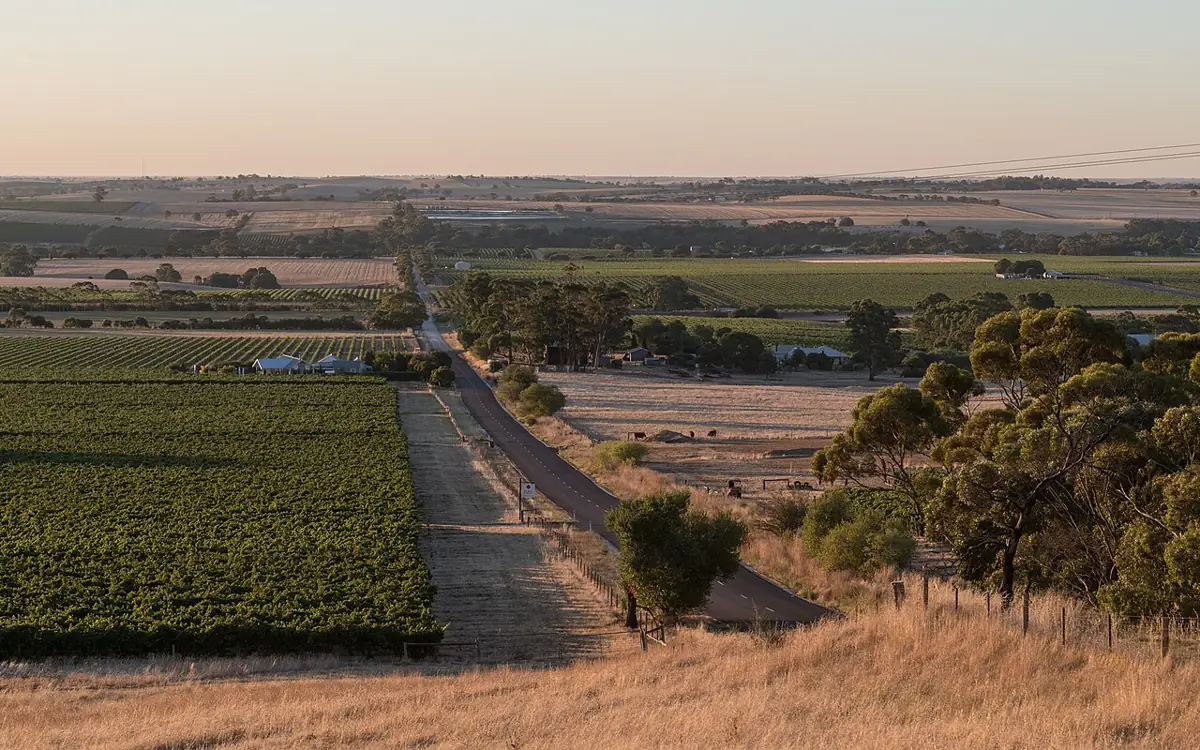
Photo: View of Rifle Range Rd, Krondorf, Barossa Valley 20230207.jpg by User:DXR, CC BY-SA 4.0, via Wikimedia Commons.

This guide explains each decision in turn. It is part of our food tours planning guide. For background on the format, see our winery tours page and the article winery tours beyond the cellar door. We do not sell tours or publish prices.
Step 1: choose a region near your base
Australia has dozens of wine regions. Wine Australia, the industry's statutory body, publishes information on each one. For a day trip, the practical question is which region is within reach of where you are staying.
| Base city | Nearby regions | Known for | Our page |
|---|---|---|---|
| Melbourne | Yarra Valley, Mornington Peninsula | Cool-climate chardonnay, pinot noir and sparkling | Yarra Valley, Mornington Peninsula |
| Adelaide | Barossa, McLaren Vale, Adelaide Hills, Clare Valley | Shiraz, grenache, riesling | Barossa, Adelaide |
| Sydney | Hunter Valley | Semillon and shiraz | Hunter Valley |
| Perth | Swan Valley; Margaret River for longer trips | Cabernet sauvignon and chardonnay (Margaret River) | Margaret River, Perth |
| Hobart | Coal River Valley, Derwent Valley | Cool-climate pinot noir and sparkling | Hobart |
| Canberra | Canberra District | Shiraz and riesling | Canberra |
Distances matter. Some regions are a short drive from the city; others, such as the Hunter Valley and Margaret River, involve a long drive and are often better as an overnight stay.
Step 2: decide how you will get around
This is the most important decision, because tasting and driving do not mix. You have three main options.
Small-group tour. A driver-guide takes a group to a set itinerary of cellar doors, often with lunch included. It is the simplest option and often the most economical for one or two people. The trade-off is less control over where you go.
Private driver or car. You choose the cellar doors and the pace. This suits groups, special occasions and people with particular wineries in mind.
Self-drive with a designated driver. It works only if one person genuinely does not drink. Australian drink-driving limits are strict and enforced with random breath testing. State road-safety bodies such as Victoria's TAC explain the rules; if in doubt, do not drive.
Some regions also have bike tours or hop-on hop-off services. Check what operates locally on the region's official tourism website.
Step 3: plan the number of cellar doors
Three or four cellar doors plus lunch is a comfortable day for most people. A sensible shape:
- Late morning: first cellar door (a larger winery with a broad range is a good start).
- Midday: a second, smaller producer.
- Lunch: a winery restaurant or regional café, booked ahead.
- Afternoon: one or two more cellar doors, perhaps with a cheese, chocolate or produce stop.
Mixing large and small producers gives you contrast. Asking cellar-door staff for recommendations often leads to the best discoveries.
Step 4: book ahead
Many cellar doors now take bookings for tastings, and some smaller producers open only on certain days or by appointment. Popular winery restaurants can book out weeks ahead on weekends.
- Check opening days and booking requirements on each winery's website.
- Book lunch first, then build the cellar-door route around it.
- Weekends, long weekends, school holidays and vintage (late summer and autumn) are the busiest times.
Tasting etiquette
Cellar-door staff are usually happy to talk you through the wines. A few habits make the experience better:
- Follow the order offered, usually from lighter to fuller wines.
- Use the spittoon or tip out what you do not want. It is normal and expected.
- Share a tasting with your partner or friend if you want to pace yourself.
- Ask questions about the vineyard, the vintage and the winemaking.
- Do not wear strong perfume, which affects others' tasting.
- Buying is optional, although many visitors like to take home a bottle of something they enjoyed. Some cellar doors charge a tasting fee that may be waived if you buy.
Staying safe and comfortable
- Eat a proper breakfast and have lunch.
- Drink water between cellar doors.
- Count your tastings. Small pours add up over a day.
- Wear comfortable shoes for vineyard paths and bring a hat and sunscreen in summer.
- Store purchases out of the sun. Heat damages wine left in a hot car.
If you do not drink alcohol, many cellar doors offer non-alcoholic options, and regional food stops (cheese, chocolate, olive oil, produce) can make the day just as enjoyable.
Combining wine with food
The best winery days are often as much about food as wine. Many regions have cheese makers, chocolatiers, olive groves, smokehouses and farm gates. Our article on pink wine and long lunches explores the long-lunch tradition, and seasonal produce on food tours explains what to look for in different seasons.
If you have dietary requirements, tell the tour operator and the restaurant in advance. Our dietary requirements guide covers what to ask.
When a winery tour may not suit you
A winery day is not the right choice for everyone. Consider a city market or walking tour if you do not drink, you are travelling with young children, or you have only a few hours. Our how to choose page compares the options.
Where to go next
- Back to the food tours planning guide
- Regions hub and winery tours
- Melbourne food tours guide (Yarra Valley day trips)
- Sydney food tours guide (Hunter Valley trips)
- Food tours FAQ
Frequently asked questions
How many wineries should I visit in a day?
Three or four cellar doors plus lunch is a comfortable pace for most people. More than that tends to blur the wines together and leaves little time to talk to staff or enjoy the setting.
Do I need to book cellar door tastings?
Increasingly, yes. Many cellar doors take bookings, and some only accept groups by appointment. Smaller wineries may have limited opening days. Check each winery's website before you go.
Is it better to take a winery tour or hire a driver?
A small-group tour is simplest and often the most economical for one or two people. A private driver gives you control over the itinerary and suits groups. Either option means nobody in your party has to drive after tasting.
What is the best wine region to visit from a capital city?
The Yarra Valley is close to Melbourne, the Barossa and McLaren Vale are close to Adelaide, the Hunter Valley is reachable from Sydney, and the Swan Valley is near Perth. Margaret River is further from Perth but popular for longer trips.