Guide
What to expect on a food tour: how they run, how much you eat and etiquette
A plain-English guide to what actually happens on an Australian food tour: the structure of the day, how much food you get, drinks, walking, group etiquette, tipping, what to wear and what to bring.
Published
On a typical Australian food tour you meet a guide at a set point, walk or travel between several venues, and try a small serve at each one while the guide explains the food, the people who make it and the history of the area. Tours usually last a few hours in a city, or most of a day in a wine region. By the end most people have eaten the equivalent of a generous meal.
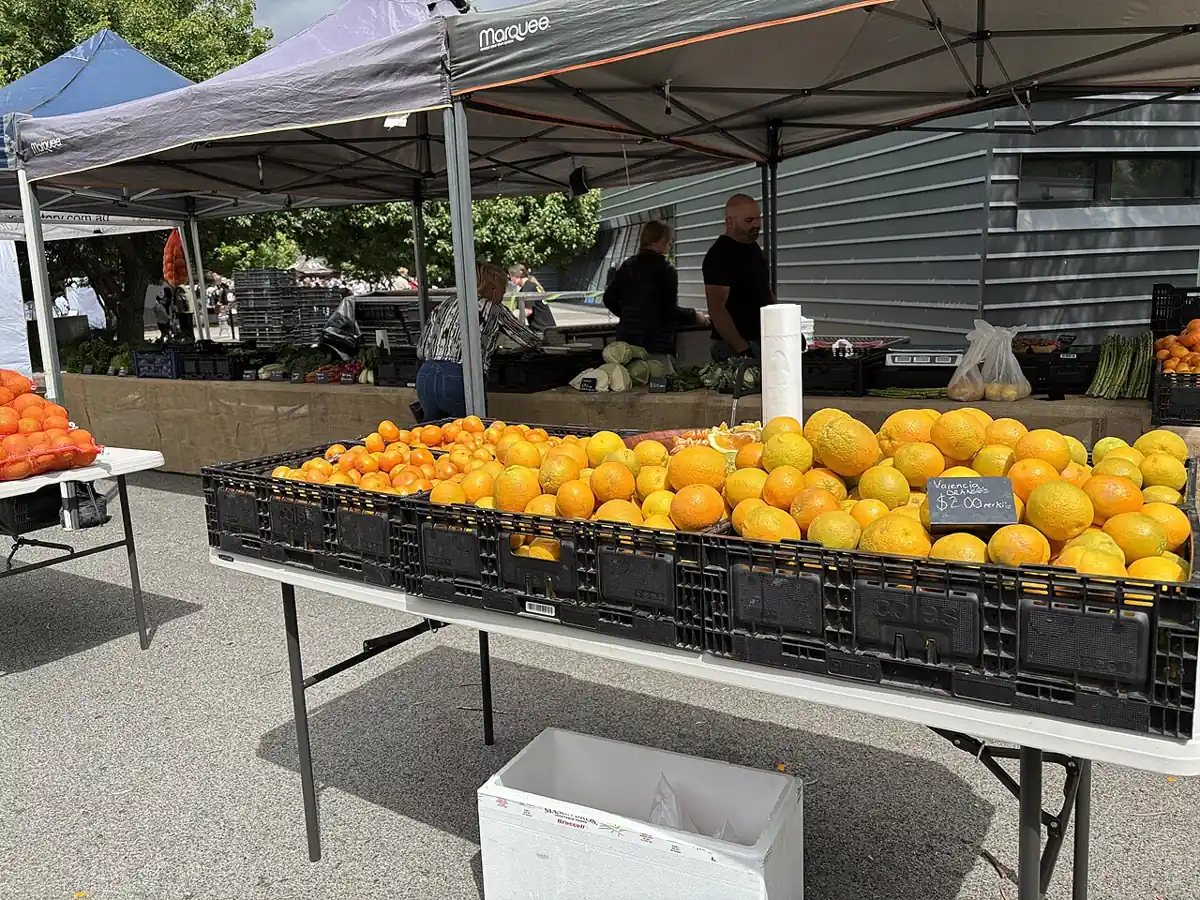
Photo: Fruit and vegetable stall at Southside Farmers Market November 2025.jpg by Nick-D, CC BY-SA 4.0, via Wikimedia Commons.

That is the short answer. The rest of this guide explains what happens at each stage, so you can arrive hungry, comfortable and ready to get the most from the day. If you are still choosing a tour, start with our planning guide or how to choose a food tour.
How a food tour is structured
Most tours follow a similar shape, whatever the city or theme.
- Meeting point. You meet the guide at a landmark, café or market entrance. Arrive ten minutes early; tours often leave on time because venues are expecting the group.
- Introduction. The guide checks names, dietary requirements and any mobility needs, and outlines the route.
- Tasting stops. You visit a series of venues: cafés, bakeries, delis, market stalls, restaurants, bars or cellar doors. At each, there is a tasting and a short talk, sometimes from the owner or chef.
- Walking or travel between stops. On a walking tour this is where much of the storytelling happens, covering architecture, migration history and how the neighbourhood's food scene developed.
- Finish. Many tours finish with a sweet stop or a sit-down tasting, and the guide shares recommendations for the rest of your stay.
Chef-guided tours often reverse the emphasis: a shorter market visit, followed by a longer cooking session or lunch. Our article on what you actually get on a chef-guided tour goes into detail.
How much food will you get?
This is the question operators are asked most often, and the honest answer is that it varies by tour. A useful way to read a tour description is to look for three things:
- The number of stops. More stops does not always mean more food. A tour with a few substantial tastings can be more filling than one with many single bites.
- Whether a meal is included. Some tours finish with a shared lunch or dinner; others are tastings only.
- The time of day. Morning market tours tend to be lighter; evening tours more substantial.
Most people find they do not need another meal straight after a food tour. Skip a big breakfast before a morning or lunchtime tour, and do not book a large dinner straight after an evening one.
Drinks and alcohol
Drink inclusions are one of the biggest differences between tours. Walking tours often include water, coffee or soft drinks, and sometimes a matched glass of wine or beer at one or two stops. Winery and brewery tours are built around tastings, which are usually small pours.
A few practical points:
- Tastings add up. Across a full winery day, small pours can amount to a significant amount of alcohol. Use spittoons, share tastings and drink water. Our winery tour day planning guide covers pacing.
- Do not drive. If you plan to taste, book a tour with transport or arrange a driver who is not drinking. State road-safety bodies such as Victoria's TAC explain drink-driving rules.
- Alcohol-free options. Many tours can substitute non-alcoholic drinks. Ask when you book.
- Age limits. Tours that include alcohol may restrict guests to adults or require under-18s to be accompanied.
Walking, pace and accessibility
City walking tours involve a moderate amount of walking at a gentle pace, with plenty of stops. Even so, you will be on your feet for most of the tour, sometimes on uneven footpaths, cobbles or laneways, and some venues have steps.
If you have mobility needs, contact the operator before booking and ask:
- roughly how far the route covers and whether there are hills or stairs
- whether seating is available at most stops
- whether venues are wheelchair accessible
- whether a shorter or adapted route is possible.
Regional tours involve less walking but more time in a vehicle. Ask about vehicle access and the time spent travelling between stops.
Dietary requirements
Tell the operator about any dietary requirement when you book, not on the day. Venues usually prepare tastings in advance, and a last-minute request may mean you simply miss a stop.
Common requirements such as vegetarian or gluten-free can often be catered for, but some tours are built around a single ingredient (seafood, cheese, chocolate) and may not suit you. Our dietary requirements guide explains how to approach allergies, coeliac disease, vegan diets and religious requirements, and what to ask.
Etiquette on a group food tour
Food tours are social, and a little etiquette makes the experience better for everyone.
- Be on time. Venues prepare for the group at set times.
- Listen during the talks. Producers and chefs often give their time to speak to the group.
- Take photos, but ask first before photographing staff or kitchens.
- Share space. Laneways and market aisles are busy; keep the group compact so locals can get past.
- Do not ask for extras at every stop. Tastings are pre-arranged. If you love something, buy more after the tour; many guides will point you back to the venue.
- Respect the venue's rules, for example about touching produce at markets.
Tipping in Australia
Tipping is not expected in Australia. Guides and hospitality staff are paid under Australian awards, so the price you pay is the price. If your guide went beyond expectations, a tip is a kind gesture, but there is no standard amount and no obligation. Buying something from a venue you enjoyed is another good way to say thanks.
What to wear and bring
| Bring | Why |
|---|---|
| Comfortable, closed shoes | You will be on your feet; market floors can be wet |
| Layers and a light rain jacket | Weather can change quickly, especially in Melbourne and Hobart |
| Hat, sunscreen and sunglasses | Australian sun is strong, even on mild days |
| Water bottle | Tastings can be salty or rich; stay hydrated |
| Small bag or tote | For anything you buy along the way |
| Card and some cash | Most venues take cards; a few market stalls prefer cash |
| Medication | Including any allergy action plan and adrenaline autoinjector |
When a food tour may not suit you
A tour is not always the right choice. Consider a self-guided day or a restaurant booking if:
- you want a single, long sit-down meal rather than many small tastings
- you have a dietary requirement the operator cannot confidently meet
- you prefer to set your own pace and linger
- your budget is better spent on one memorable restaurant.
Our how to choose page compares guided and self-guided options in more depth.
Where to go next
Frequently asked questions
Will I be full after a food tour?
On most well-designed tours, yes. The tastings are small individually but add up over several stops. Many operators suggest a light breakfast or skipping the meal before. Check the description to see whether a full meal is included.
Should I tip on a food tour in Australia?
Tipping is not expected in Australia because hospitality and tourism workers are paid award wages. If your guide was excellent, a tip is a welcome gesture but entirely optional.
Can children go on food tours?
Many walking and market tours welcome children, sometimes at a reduced rate, but tours that include alcohol may have age limits. Check the operator's policy before booking.
What happens if it rains?
Most city walking tours run in light rain, with covered stops where possible. Operators normally cancel only in severe weather. Read the weather and cancellation policy before you book.
Is alcohol included on food tours?
It depends on the tour. Some include a matched drink at certain stops, winery tours are built around tastings, and many walking tours include only non-alcoholic drinks. Inclusions are listed by the operator.